Entropy is Not the Enemy
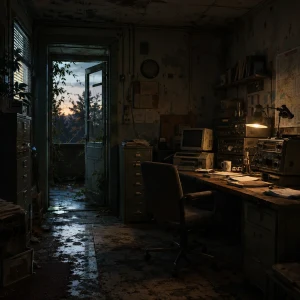
Entropy is not only rust and collapse. It is also the reason anything changes at all.
Entropy gets a bad reputation.
We hear the word and think of collapse. Disorder. Rust. Heat death. The slow failure of every machine, every body, every system, every promise.
And sure, that is part of it.
Leave a house alone long enough and the roof will sag. Leave a road untended and the weeds will take it. Leave a server unpatched and something eventually crawls in through the forgotten port, probably at 2:13 AM on a holiday weekend. Leave a memory untouched and it starts changing shape, whether you gave it permission or not.
Everything drifts.
That is the part people fear.
But entropy is not just the force that breaks things apart.
It is also the reason anything changes at all.
A World Without Entropy
A world without entropy would be perfectly still. Nothing would rot, but nothing would grow. Nothing would die, but nothing would be born. No stories would age into myth. No cities would crumble into ruins. No old machines would become artifacts. No grief would soften into memory. No forest would reclaim the fence line.
It would all just remain.
Frozen.
Permanent.
Dead in a different way.
Basically a museum where even the gift shop never changes, which may be somebody’s idea of heaven, but it sounds suspiciously like a conference room with no windows.
We spend so much of our lives fighting disorder that we forget disorder is often where life begins again. Soil is not clean. Forest floors are not organized. Rivers do not ask permission before changing course. Even the human mind is not a filing cabinet. It is a storm of fragments, ghosts, half-remembered rooms, old songs, passwords, regrets, faces, warnings, and unfinished conversations.
Somehow, from that mess, we call ourselves a person.
Bold of us, honestly.
Civilization Gets Old
The same thing happens in civilization.
Every age builds systems it believes will last. Governments. Companies. Networks. Roads. Schools. Churches. Databases. Borders. Brands. Myths. Then time gets inside them. People leave. Standards change. Budgets vanish. The original builders die or retire. The manual goes missing. The language shifts. The clean design becomes a workaround. The workaround becomes policy. The policy becomes tradition. The tradition becomes absurd.
And one day, everyone stands around asking why the machine behaves this way.
The answer is usually simple.
Because it has been alive too long.
Also because nobody wanted to touch the old part because “it still works,” which is the official anthem of every doomed system ever built.
That is not always bad.
Beauty in the Patched Thing
There is beauty in the patched thing. In the old radio still catching a signal. In the handwritten note taped beside the switch. In the road that bends around a tree older than the map. In the family story that is probably only half true but still carries the emotional truth of what happened.
Perfect systems have no scars.
Living systems do.
Entropy leaves marks. It discolors the photograph. It warps the floorboards. It softens the edges of memory. It turns yesterday’s certainty into tomorrow’s question. It reminds us that control was always temporary.
Which is rude, but accurate.
Room Inside the Decay
But it also makes room.
That is the secret hidden inside the decay.
The old thing breaks, and suddenly light gets in through a crack nobody planned. The abandoned place becomes shelter. The failed dream becomes a lesson. The obsolete machine becomes a relic. The burned field becomes green. The person you were becomes the soil for the person you are still becoming.
This is not optimism, exactly.
Optimism can be cheap. It can pretend the rot is not there.
This is something darker and more honest.
The rot is there.
The rust is real.
The system is failing.
The body is aging.
The archive is incomplete.
The signal is fading.
And still, something moves beneath it.
That movement matters.
Into Entropy begins there, in the uneasy space between collapse and transformation. It does not worship decay, and it does not deny it. It watches the old forms weaken. It listens for the new ones underneath. It understands that every ending leaves material behind.
Ash.
Data.
Bone.
Memory.
Seeds.
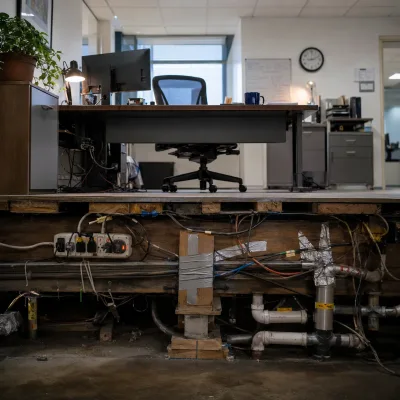
And probably one unlabeled cable nobody is brave enough to unplug.
The world is always falling apart.
The world is always becoming something else.
Entropy is not the enemy.
It is the weather we were born inside.
Discussion