When the Workers Stop Coming
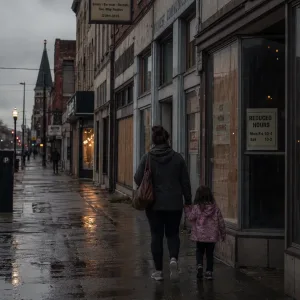
Population decline and the quiet disappearance of the people who keep society running.
The first sign of population decline will not be a dramatic headline. It will be a paper sign taped to a door: Closed early due to staffing shortage.
You will see it at the diner, the pharmacy, the clinic, the repair shop, the county office, the daycare, the nursing home, the airport counter, the emergency room. At first it will feel like bad management. Then bad luck. Then “kids these days.” Then, eventually, the new normal.
That is how social entropy usually arrives. Not as thunder. As reduced hours.
A civilization does not become fragile only when the buildings fall down. It becomes fragile when there are fewer people left to maintain them. Fewer nurses. Fewer mechanics. Fewer teachers. Fewer caregivers. Fewer linemen. Fewer drivers. Fewer cooks. Fewer technicians. Fewer people willing, trained, or available to stand between normal life and the slow pull of disorder.
Work That Stays Hidden
The modern world is not self-sustaining. It only looks that way because the work is hidden. Somebody restocks the shelves. Somebody patches the server. Somebody resets the breaker. Somebody answers the phone. Somebody unclogs the drain. Somebody fixes the truck. Somebody checks on the old man in room 214. Somebody shows up at 3 AM because the alarm went off and the machine, once again, has opinions.
When those people are hard to find, the system does not immediately collapse. It just gets worse. A little slower. A little thinner. A little more automated. A little more tired.
The signs are already everywhere, if you know how to read them: longer wait times, shorter business hours, closed on Mondays, no same-day appointments, emergency rooms backed up, restaurants that cannot staff the kitchen, contractors booked out for months, schools scrambling for teachers, nursing homes desperate for aides, rural hospitals hanging on by thread and policy miracle.
Each of these is its own local problem. Together, they start to look like a demographic weather pattern.
The Numbers
Across much of the developed world, fertility rates have fallen far below replacement level. The OECD reported that the average fertility rate across member countries fell from 3.3 children per woman in 1960 to 1.5 in 2022, well below the rough replacement level of 2.1.1 The United Nations has also warned that countries with decades of low fertility are aging rapidly, with some already beginning to decline in population size.2 Pew Research notes that fertility rates have declined in every world region since 1950.3
So no, this is not just one billionaire’s pet anxiety.
Elon Musk may be the loudest and most polarizing person warning about it. He has said that “population collapse due to low birth rates is a much bigger risk to civilization than global warming.”4 The problem with Elon as messenger is that half the room starts arguing about Elon before they ever get to the issue. But the issue does not disappear because the messenger annoys people.
The numbers are real. The aging is real. The labor shortages are real. The question is what they mean.
The Human Face
Population decline is usually discussed in abstractions: fertility rates, dependency ratios, workforce participation, migration flows, pension sustainability, economic growth. Important terms, sure. But they do not quite capture the feeling of standing in front of a locked door at 4:30 PM because the place no longer has enough people to stay open until 6.
That is the human face of it. That is entropy with a laminated sign.
Smaller family sizes do not simply mean fewer children at Thanksgiving. They eventually mean fewer adults entering the workforce. Fewer siblings sharing eldercare. Fewer cousins, nieces, nephews, neighbors, apprentices, volunteers, replacements, backups, and warm bodies. It means the old systems keep aging while fewer young people arrive to inherit the maintenance burden.
Maintenance Is Everything
And maintenance is everything.
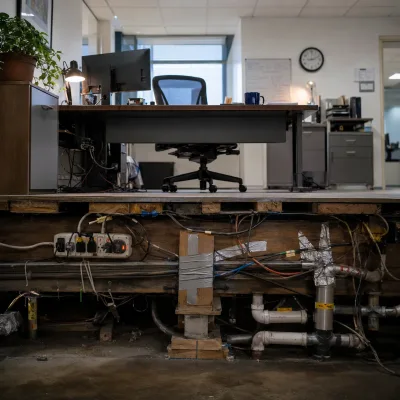
Civilization is mostly maintenance with better branding. Roads must be repaired. Pipes must be replaced. Software must be patched. Power lines must be restored. Patients must be lifted. Children must be taught. Food must be transported. Forms must be processed. Engines must be fixed. Floors must be mopped. Passwords must be reset. Someone has to remember where the shutoff valve is.
This is not glamorous work, which is unfortunate, because it is also the work that keeps us from becoming a historical exhibit.
When the birthrate falls, the first losses may seem manageable. A school district combines classes. A restaurant closes one extra day. A hospital leans harder on traveling nurses. A company outsources support. A rural county shares services. A family rotates care for an aging parent.
Everyone adapts. That is what people do. But adaptation has a cost.
The people who remain carry more. They work longer shifts. They delay retirement. They skip vacations. They become the institutional memory, the emergency contact, the one person who knows how the old system works. And then one day, they leave too.
The Quiet Room
That is when the room gets quiet.
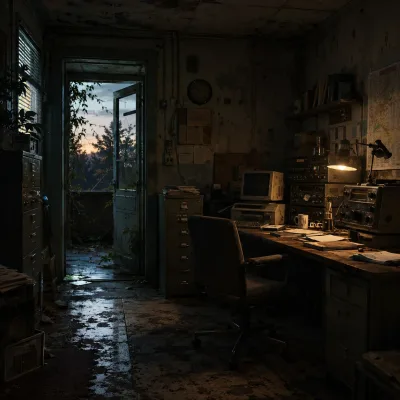
Not peaceful quiet. Liminal quiet. The kind of quiet you feel in an office after the last employee shuts off the lights, except the phones are still ringing somewhere. The kind of quiet in a school hallway after the building has been consolidated. The kind of quiet in a small-town clinic with half the rooms dark. The kind of quiet where something has ended, but nobody has admitted it yet.
This is where population decline becomes more than a chart. It becomes atmosphere.
It becomes the feeling of a society between states. Not dead. Not thriving. Still open. Still functioning. Still insisting everything is fine, but with fewer people behind the counter each year.
Possible Answers
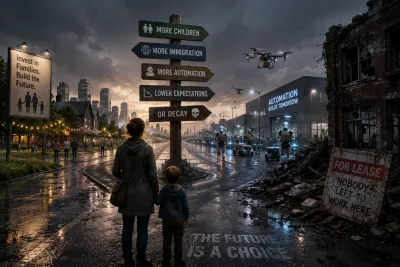
Of course, there are answers. Immigration can help, and in many countries it already does. Delayed retirement can help, if people are healthy enough and not completely burned out. Better wages can pull some workers back into essential jobs. Better housing, childcare, healthcare, and family policy can make parenthood less punishing. Automation can reduce the burden.
But none of those answers are magic. They are choices, and they come with tradeoffs.
A society that becomes too expensive, too lonely, too unstable, too overworked, too atomized, or too hostile to family formation should not be shocked when fewer people form families. You cannot build an economy that treats children like luxury goods and then act surprised when people buy fewer of them.
At the same time, you cannot sneer at automation forever while also wondering why nobody is available to do the work.
The Trap
This is the trap forming under the modern world. We want unlimited service, low prices, instant delivery, eldercare, healthcare, convenience, infrastructure, safety, education, logistics, and clean bathrooms. But we are less sure we want the human future required to staff it.
That future requires children. It requires families. It requires communities stable enough for people to imagine tomorrow. It requires work that pays enough to build a life. It requires the kind of cultural confidence that says the future is worth populating.
Without that, the machine still runs. For a while. Then it starts asking for substitutions.
More self-checkout. More kiosks. More call trees. More apps. More remote monitoring. More algorithmic scheduling. More warehouse robots. More AI support. More machines standing where people used to stand.
Some of that is good. Some of it is necessary. Some of it will be brilliant. Some of it will be garbage with a touchscreen and a monthly subscription. The direction, though, is not mysterious.
Something Else Carries the Load
When the workers stop coming, something else has to carry the load. Or the load gets dropped.
That is the uncomfortable part. The population debate is often framed as moral panic on one side and personal freedom on the other. But beneath the noise is a simpler systems question:
Who maintains the world when there are fewer people available to do it?
Not the world in theory. The actual world. The bridge. The hospital bed. The water plant. The school bus. The router. The ambulance. The nursing home. The gas station at midnight. The help desk ticket that says “urgent” because, for once, it actually is.
A civilization does not need to collapse loudly. Sometimes it just stops being fully staffed.
The doors still open. The lights still hum. The desk lamp still glows over the paperwork. But the chair behind the counter is empty more often than it used to be.
And somewhere, taped to the glass, the future has already left a note.
Discussion